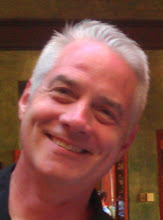
Dear Friends,
Here is a link that will take you to a website that has shows my paintings from my time in San Miguel. I have included photos of the subjects, underpainting, progress and final paintings. Enjoy!
http://picasaweb.google.com/mtyikes/SabbaticalPaintings#
Thursday, October 2, 2008
Thursday, July 31, 2008
How awesome is this place
July 20, 2008
Proper 11, Year A
Matthew 13:24-30, 36-43
San Miguel de Allende is located in the central highlands of Mexico – almost in the center of the country – at an elevation of 6400 feet above sea level – a thousand feet higher than the mile high city of Denver, Colorado. It is snuggled in on the side of a mountain surrounded by reservoirs, creating an oasis out of the desert surroundings. The mission of San Miguel was founded in 1542 by the Franciscan monk Juan de San Miguel.
As a designated historic site in Mexico, the original colonial buildings are kept restored; paint colors must be approved. Local police direct traffic because there are no traffic lights. In the center of town is El Jardin (the garden), the meeting place, the town square, the hang-out of locals, ex-patriots and tourists. They are there in the morning with newspaper and coffee; they are there in the heat of day, sheltered by the well-groomed trees; they are there in the evening with the Mariachi bands and food vendors. Each night there is music, conversation, the smell of corn on the cob roasting over a mesquite grill, children racing about with balloons and whistles, lovers on park benches, fireworks and rockets now and then exploding near and far, all-the-while the parade of people slowly circling and re-circling the Jardin.
The Jardin is surrounded by 17th century Spanish colonial buildings, archways and cobblestones. On the south side is the Parroquia, the parish church of San Miguel, Saint Michael, with its pink and orange marble, where bells ring out the hours and the call to mass.
It is its beauty, its year-round spring like climate, its people (gracious and welcoming) and its art that draw people to San Miguel. Out of a population of 85,000, 6-8000 (about 10% of the population) are expatriates, American, Canadian, Australian, and European, who have decided to make San Miguel home.
In the morning, I studied Spanish. In the afternoon, I painted, then a late lunch, a siesta, homework, a walk to the market or the Jardin or Parque Juarez and then dinner.
It was interesting to be in San Miguel principally as an artist. There are a number of art classes, studios, and galleries, a number of people involved in the art world. I found the ex-patriot community very friendly, people eager to strike up conversation about art. Eventually, the conversation would often go something like this: “ So, do you live here?” “No, I’m just here for a sabbatical, for 3 ½ months.” “A sabbatical? Are you a teacher? A professor?” “No, I’m a priest, Episcopal, Anglican.” “Oh, I use to be an Episcopalian.” Or “Do you know Fr. Long?” (The local Episcopal priest.) I was surprised that no one asked me “what is an Episcopal priest?” Often they would want to talk about their spiritual journey or the current state of the church or what it was that caused them to drift away or what brought them to San Miguel (often a spiritual component to it) or what I thought was at the heart of religion and the spiritual journey. I felt very welcomed, very well received, a place where John and I were well-received together.
Here in this high desert mountain town, out in the middle of nowhere, is a kind of crossroads of the world – a place some have deliberately sought out in the desire to live life differently.
This was the place of my sabbatical. It was indeed restorative. And I thank you all for making it possible and I thank Beverley and Ben for their leadership, for the staff and for all of you who stepped-in to support and care for the community – it is what we do as a faith community. It is good to be back here with you.
In today’s gospel, Jesus tells a parable of the reign of God, of the wheat and the weeds. How during the night the enemy came and sowed weeds among the wheat. The servants ask the householder if they should pull up the weeds that have started to grow and the householder says “no” let them be because in so doing you are likely to pull up the wheat right along with the weeds. Leave them be until the harvest.
Leave them be. Leave it to God. Leave it to the harvest. It is not you or I who are to decide who are the wheat and who are the weeds, who belong and who do not, who are the enemy and who are the righteous. Leave them to God. And as I read the parable what I hear or want to hear is not so much that in the end “they” will get their “just desserts” but that there is much we do not know and it is not our place to decide who belongs and who does not – who is good and who is evil, and we are apt to do damage if we do so, if we set ourselves up as judge when it comes to the kingdom, the queendom, the dominion of God.
It feels as though we live in a time, in a world that is eager to pluck the weeds from the wheat – in our social-political life as well as our religious life. We are quick to set up fences and walls and borders and alternate communions and declare who is in and who is out and with whom we will sit at table and with whom we will not. And it goes both ways. We are estranged from one another, from our neighbor, from our brothers and sisters. I saw it this past week in banners hanging all over Lebanon at the exchange of prisoners and bodies between Israel and Lebanon – banners that read: “Pain for Israel. Joy for Lebanon.” There has been pain on both sides. But how can one rejoice at the pain of others? And yet we do. It is not easy.
Lambeth began on Wednesday of this week. Every ten years, the bishops in the Anglican Communion gather in Canterbury at the invitation of the Archbishop of Canterbury for the Lambeth Conference to worship together and to study and debate key issues affecting the Anglican Communion.
Yet, more than 200 Anglican bishops from around the world, including many from Africa and at least three from within the Church of England, have refused to attend Lambeth because of the presence of leaders from America and Canada who approved the election of Gene Robinson as Bishop of New Hampshire and by blessing same-sex unions. Some Anglo-Catholics who are attending say they cannot attend services presided over by women clergy. And the Archbishop of Canterbury chose not to invite Gene Robinson to Lambeth, the only duly elected bishop in the Anglican Communion not to be invited to Lambeth.
Bishops who are at Lambeth will spend the next two weeks discussing the issues that have led the Anglican Communion to the brink of schism.
In his opening remarks to Lambeth, the Archbishop said: "I don't imagine that simply building relationships solves our problems but the nature of our calling as Christians is such that we dare not, and I say very strongly, dare not pretend that we can meet and discuss without attention to this quality of relation with each other even if we disagree or find ourselves going in different directions. The Lord of the church commands that we must love one another in the process and there is no alternative to that. I trust that you are here in that confidence, in that willingness to love one another."
We hold them in our prayers.
It would be easy to read the parable today and focus on the weeds. “They’ll get theirs one day!” And I know that feeling of righteous indignation and desire for vindication and vengeance, that the bad guys will be judged, found guilty and thrown into the fire and I/we will be vindicated! We’d like to weed them out now if we could - on all sides. And there would be no one left. Somehow we think that if we could just get rid of “them”, our lives, our world, would be better. It is not the nature of God. Jesus’ emphasis here in this parable is on the householder’s care for the wheat, not on what is evil but on what is good. We catch a glimpse of something about the nature of God, of patience, forbearance and nurture for the good.
This is a hard gospel for us today, living in this strange time where we are afraid, afraid of the stranger, afraid of those who are different from us. In San Miguel, I did not have the use of a car, nor did I need one. In and around town, I walked everywhere. And the custom there is to greet one another. As you pass one another in the street or enter the market or shop, “Buenas Dias.” “Buenas Dias.” “Buenas tardes.” Buenas Tardes” – to acknowledge one another. I found it very human, gracious, polite and alive. It is odd being back here, how most often we ignore one another, those we don’t know, almost pretending as though the other person is not even there, as though we don’t even see them. We set up our walls, protect ourselves and run around in a bubble. In her book, Illuminated Life, Joan Chittister, a Benedictine Sister, prays for “the love of strangers.” She writes: “It is not what others think of us; it is what we think of others that singles the contemplative out in a crowd. Our role in life is not to convert others. It’s not even to influence them. It certainly is not to impress them. Our goal in life is to convert ourselves from the pernicious agenda that is the self to an awareness of God’s presence in the other.”
In our first lesson this morning from Genesis, the story of Jacob continues to unfold. Jacob is running away from this brother Esau after having tricked him out of his father’s blessing and birthright. In the wilderness, Jacob dreams, he dreams of a ladder with angels going up and down from heaven. And God says, “Know that I am with you and will keep you wherever you go.” When Jacob awakes and is afraid, he says, “Surely the Lord is in this place – and I did not know it! … How awesome is this place! This is none other than the house of God, and this is the gate of heaven.”
In the middle of nowhere, with a stone for a pillow, running from his life and for his life, estranged from his brother, Jacob encounters God. “Surely God is in this place and I did not know it.” Eventually, Jacob will seek out and be reconciled with his brother.
Wherever we find ourselves, even if we do not know it, God is in that place. God is with us and how awesome is that place. When we can dream and awaken with the knowledge that God is with us and will keep us wherever we go, then how awesome is that place; it is none other than the house of God and the gate of heaven. Whether it is San Miguel or Atlanta or 1790 LaVista Road or your own pillow or the ground beneath your feet, when we can awaken with the knowledge that God is with us and will keep us wherever we go, then how awesome is that place – in our hearts and minds and souls; it is none other than the house of God and the gate of heaven. For you see, then life as a whole becomes sacramental and it opens for us our life with the divine. How awesome is that place!
This morning, we come to this place in prayer. We pray for the bishops at Lambeth. We pray for reconciling hearts. We pray for our own dreams and our own awakening, for our connection with the divine life, for our relationships and estrangements. We come to this altar, praying for God to open something new within us, to nurture and grow that good seed. How awesome is this place! How awesome is this place! This is none other than the house of God, and this is the gate of heaven.
Amen.
Proper 11, Year A
Matthew 13:24-30, 36-43
San Miguel de Allende is located in the central highlands of Mexico – almost in the center of the country – at an elevation of 6400 feet above sea level – a thousand feet higher than the mile high city of Denver, Colorado. It is snuggled in on the side of a mountain surrounded by reservoirs, creating an oasis out of the desert surroundings. The mission of San Miguel was founded in 1542 by the Franciscan monk Juan de San Miguel.
As a designated historic site in Mexico, the original colonial buildings are kept restored; paint colors must be approved. Local police direct traffic because there are no traffic lights. In the center of town is El Jardin (the garden), the meeting place, the town square, the hang-out of locals, ex-patriots and tourists. They are there in the morning with newspaper and coffee; they are there in the heat of day, sheltered by the well-groomed trees; they are there in the evening with the Mariachi bands and food vendors. Each night there is music, conversation, the smell of corn on the cob roasting over a mesquite grill, children racing about with balloons and whistles, lovers on park benches, fireworks and rockets now and then exploding near and far, all-the-while the parade of people slowly circling and re-circling the Jardin.
The Jardin is surrounded by 17th century Spanish colonial buildings, archways and cobblestones. On the south side is the Parroquia, the parish church of San Miguel, Saint Michael, with its pink and orange marble, where bells ring out the hours and the call to mass.
It is its beauty, its year-round spring like climate, its people (gracious and welcoming) and its art that draw people to San Miguel. Out of a population of 85,000, 6-8000 (about 10% of the population) are expatriates, American, Canadian, Australian, and European, who have decided to make San Miguel home.
In the morning, I studied Spanish. In the afternoon, I painted, then a late lunch, a siesta, homework, a walk to the market or the Jardin or Parque Juarez and then dinner.
It was interesting to be in San Miguel principally as an artist. There are a number of art classes, studios, and galleries, a number of people involved in the art world. I found the ex-patriot community very friendly, people eager to strike up conversation about art. Eventually, the conversation would often go something like this: “ So, do you live here?” “No, I’m just here for a sabbatical, for 3 ½ months.” “A sabbatical? Are you a teacher? A professor?” “No, I’m a priest, Episcopal, Anglican.” “Oh, I use to be an Episcopalian.” Or “Do you know Fr. Long?” (The local Episcopal priest.) I was surprised that no one asked me “what is an Episcopal priest?” Often they would want to talk about their spiritual journey or the current state of the church or what it was that caused them to drift away or what brought them to San Miguel (often a spiritual component to it) or what I thought was at the heart of religion and the spiritual journey. I felt very welcomed, very well received, a place where John and I were well-received together.
Here in this high desert mountain town, out in the middle of nowhere, is a kind of crossroads of the world – a place some have deliberately sought out in the desire to live life differently.
This was the place of my sabbatical. It was indeed restorative. And I thank you all for making it possible and I thank Beverley and Ben for their leadership, for the staff and for all of you who stepped-in to support and care for the community – it is what we do as a faith community. It is good to be back here with you.
In today’s gospel, Jesus tells a parable of the reign of God, of the wheat and the weeds. How during the night the enemy came and sowed weeds among the wheat. The servants ask the householder if they should pull up the weeds that have started to grow and the householder says “no” let them be because in so doing you are likely to pull up the wheat right along with the weeds. Leave them be until the harvest.
Leave them be. Leave it to God. Leave it to the harvest. It is not you or I who are to decide who are the wheat and who are the weeds, who belong and who do not, who are the enemy and who are the righteous. Leave them to God. And as I read the parable what I hear or want to hear is not so much that in the end “they” will get their “just desserts” but that there is much we do not know and it is not our place to decide who belongs and who does not – who is good and who is evil, and we are apt to do damage if we do so, if we set ourselves up as judge when it comes to the kingdom, the queendom, the dominion of God.
It feels as though we live in a time, in a world that is eager to pluck the weeds from the wheat – in our social-political life as well as our religious life. We are quick to set up fences and walls and borders and alternate communions and declare who is in and who is out and with whom we will sit at table and with whom we will not. And it goes both ways. We are estranged from one another, from our neighbor, from our brothers and sisters. I saw it this past week in banners hanging all over Lebanon at the exchange of prisoners and bodies between Israel and Lebanon – banners that read: “Pain for Israel. Joy for Lebanon.” There has been pain on both sides. But how can one rejoice at the pain of others? And yet we do. It is not easy.
Lambeth began on Wednesday of this week. Every ten years, the bishops in the Anglican Communion gather in Canterbury at the invitation of the Archbishop of Canterbury for the Lambeth Conference to worship together and to study and debate key issues affecting the Anglican Communion.
Yet, more than 200 Anglican bishops from around the world, including many from Africa and at least three from within the Church of England, have refused to attend Lambeth because of the presence of leaders from America and Canada who approved the election of Gene Robinson as Bishop of New Hampshire and by blessing same-sex unions. Some Anglo-Catholics who are attending say they cannot attend services presided over by women clergy. And the Archbishop of Canterbury chose not to invite Gene Robinson to Lambeth, the only duly elected bishop in the Anglican Communion not to be invited to Lambeth.
Bishops who are at Lambeth will spend the next two weeks discussing the issues that have led the Anglican Communion to the brink of schism.
In his opening remarks to Lambeth, the Archbishop said: "I don't imagine that simply building relationships solves our problems but the nature of our calling as Christians is such that we dare not, and I say very strongly, dare not pretend that we can meet and discuss without attention to this quality of relation with each other even if we disagree or find ourselves going in different directions. The Lord of the church commands that we must love one another in the process and there is no alternative to that. I trust that you are here in that confidence, in that willingness to love one another."
We hold them in our prayers.
It would be easy to read the parable today and focus on the weeds. “They’ll get theirs one day!” And I know that feeling of righteous indignation and desire for vindication and vengeance, that the bad guys will be judged, found guilty and thrown into the fire and I/we will be vindicated! We’d like to weed them out now if we could - on all sides. And there would be no one left. Somehow we think that if we could just get rid of “them”, our lives, our world, would be better. It is not the nature of God. Jesus’ emphasis here in this parable is on the householder’s care for the wheat, not on what is evil but on what is good. We catch a glimpse of something about the nature of God, of patience, forbearance and nurture for the good.
This is a hard gospel for us today, living in this strange time where we are afraid, afraid of the stranger, afraid of those who are different from us. In San Miguel, I did not have the use of a car, nor did I need one. In and around town, I walked everywhere. And the custom there is to greet one another. As you pass one another in the street or enter the market or shop, “Buenas Dias.” “Buenas Dias.” “Buenas tardes.” Buenas Tardes” – to acknowledge one another. I found it very human, gracious, polite and alive. It is odd being back here, how most often we ignore one another, those we don’t know, almost pretending as though the other person is not even there, as though we don’t even see them. We set up our walls, protect ourselves and run around in a bubble. In her book, Illuminated Life, Joan Chittister, a Benedictine Sister, prays for “the love of strangers.” She writes: “It is not what others think of us; it is what we think of others that singles the contemplative out in a crowd. Our role in life is not to convert others. It’s not even to influence them. It certainly is not to impress them. Our goal in life is to convert ourselves from the pernicious agenda that is the self to an awareness of God’s presence in the other.”
In our first lesson this morning from Genesis, the story of Jacob continues to unfold. Jacob is running away from this brother Esau after having tricked him out of his father’s blessing and birthright. In the wilderness, Jacob dreams, he dreams of a ladder with angels going up and down from heaven. And God says, “Know that I am with you and will keep you wherever you go.” When Jacob awakes and is afraid, he says, “Surely the Lord is in this place – and I did not know it! … How awesome is this place! This is none other than the house of God, and this is the gate of heaven.”
In the middle of nowhere, with a stone for a pillow, running from his life and for his life, estranged from his brother, Jacob encounters God. “Surely God is in this place and I did not know it.” Eventually, Jacob will seek out and be reconciled with his brother.
Wherever we find ourselves, even if we do not know it, God is in that place. God is with us and how awesome is that place. When we can dream and awaken with the knowledge that God is with us and will keep us wherever we go, then how awesome is that place; it is none other than the house of God and the gate of heaven. Whether it is San Miguel or Atlanta or 1790 LaVista Road or your own pillow or the ground beneath your feet, when we can awaken with the knowledge that God is with us and will keep us wherever we go, then how awesome is that place – in our hearts and minds and souls; it is none other than the house of God and the gate of heaven. For you see, then life as a whole becomes sacramental and it opens for us our life with the divine. How awesome is that place!
This morning, we come to this place in prayer. We pray for the bishops at Lambeth. We pray for reconciling hearts. We pray for our own dreams and our own awakening, for our connection with the divine life, for our relationships and estrangements. We come to this altar, praying for God to open something new within us, to nurture and grow that good seed. How awesome is this place! How awesome is this place! This is none other than the house of God, and this is the gate of heaven.
Amen.

Sunday, July 13, 2008

Monday, June 30, 2008
Transitions
The first of July, I move into another house here in San Miguel for the rest of my time here. I have thoroughly enjoyed this house, Casa Corazon, for the two and half months that I have been in this house. It will be hard to leave. John was here with me for two weeks, my oldest friend, Rick was were for a week and a half, my daughter, Mary, was here for a week and my son, Cory and his wife, Ashley, were here for a week. Tomorrow, my oldest, Amy and her fiancé, Steve, arrive. It has been a busy month studying Spanish, painting and hosting family. Each has come and gone and the time remaining on my sabbatical is counting down. It has been a good time. I have enjoyed my time here.
It has also been hard to be away from the people I love and care for, which includes the parish community of St. Bartholomew’s, especially through all the inevitable transitions of life and death. I wept today when I heard the news of the death of Roslyn Blache – what kindness, gentleness and strength she brought to us. May she rest in peace. I will miss her and her leadership on the vestry. I know these transitions are part of what it means for us to be human, but I also know and embrace the grief that is real as well. Thank you all for loving and caring for her through her illness.
While I have been away, I have not forgotten you. I have prayed for you each day in my prayers. I have spoken by phone with Iris. I have spoken several times with Beverley and Ben about important matters, including the sad, sudden and untimely death of Jackie Schremmer. It is hard not to be there at such important times. I give thanks for the ordination of parishioners, Hugh Grant and Chris Girata – again, difficult not to be there. I also know that this is part of what it means to be on Sabbatical, to step away, renew, and rejuvenate. Even though away, my love and concern for you continues. I look forward to returning and resuming our life together.
Much love and peace,
Mac+
It has also been hard to be away from the people I love and care for, which includes the parish community of St. Bartholomew’s, especially through all the inevitable transitions of life and death. I wept today when I heard the news of the death of Roslyn Blache – what kindness, gentleness and strength she brought to us. May she rest in peace. I will miss her and her leadership on the vestry. I know these transitions are part of what it means for us to be human, but I also know and embrace the grief that is real as well. Thank you all for loving and caring for her through her illness.
While I have been away, I have not forgotten you. I have prayed for you each day in my prayers. I have spoken by phone with Iris. I have spoken several times with Beverley and Ben about important matters, including the sad, sudden and untimely death of Jackie Schremmer. It is hard not to be there at such important times. I give thanks for the ordination of parishioners, Hugh Grant and Chris Girata – again, difficult not to be there. I also know that this is part of what it means to be on Sabbatical, to step away, renew, and rejuvenate. Even though away, my love and concern for you continues. I look forward to returning and resuming our life together.
Much love and peace,
Mac+
Monday, June 2, 2008
Markers on the Journey
Monday a week ago, the feast of St. Augustine of Canterbury, May 26, was the 24th anniversary of my ordination to the priesthood. This month will mark my 25th anniversary to the diaconate – 25 years of ordained ministry. It is difficult sometimes for me to wrap my mind around the amount of time that has passed but I am thankful for the gift of ministry and for the various places I have been fortunate to serve.

This past weekend, John and I went to Mexico City. We visited the Basilica de la Virgen de la Guadalupe and saw the image in the cathedral. We visited the pyramids at Teotihuacan and climbed to the top of the Pyramid to the Sun; it is the third largest pyramid in the world and was completed around 200 A.D.
I am now back in San Miguel studying my Spanish and painting in the art studio with about a month and a half before I return from my sabbatical.
2008 is a year of “markers” for me. This year will mark 25 years of ordained ministry, 25 years since I graduated from seminary, 30 years since I graduated from college and 35 years since I graduated from high school. It seems appropriate to be on sabbatical and have some time to reflect on what has passed, where I am now and what possibly lies ahead. It is a journey that I could not have predicted 35 years ago when I graduated high school. There are things that have happened on the journey, things that I have chosen, things done and left undone, that I might have wished to be otherwise. There are things in which I rejoice, things in which I sorrow, but I am thankful for the journey, for this life, this holy wonderful life.

This past weekend, John and I went to Mexico City. We visited the Basilica de la Virgen de la Guadalupe and saw the image in the cathedral. We visited the pyramids at Teotihuacan and climbed to the top of the Pyramid to the Sun; it is the third largest pyramid in the world and was completed around 200 A.D.
I am now back in San Miguel studying my Spanish and painting in the art studio with about a month and a half before I return from my sabbatical.
2008 is a year of “markers” for me. This year will mark 25 years of ordained ministry, 25 years since I graduated from seminary, 30 years since I graduated from college and 35 years since I graduated from high school. It seems appropriate to be on sabbatical and have some time to reflect on what has passed, where I am now and what possibly lies ahead. It is a journey that I could not have predicted 35 years ago when I graduated high school. There are things that have happened on the journey, things that I have chosen, things done and left undone, that I might have wished to be otherwise. There are things in which I rejoice, things in which I sorrow, but I am thankful for the journey, for this life, this holy wonderful life.
Saturday, May 17, 2008
Looking Forward to a Future of Justice and Mercy
I was delighted to hear on Thursday that the Californa Supreme Court struck down the state’s ban on same-sex marriage. The ruling declared that the state Constitution protects a fundamental “right to marry” that extends equally to same-sex couples. Undoubtedly, this will not be the last struggle in California. Some organizations against same-sex marriage are alreay gathering signatures to put an admendment to the California State Constitution on the next ballot. But with each ruling it comes closer and becomes clearer that it is a matter of justice and … time.
In 2001, my partner, John, and I went to the county offices in Los Angeles and registered as “domestic partners.” The only right it offered was the right to visit one another in the hospital. We did what we could and this was the only thing offered to us as a couple to protect our life together.
The Rt. Rev. J. Jon Bruno, bishop of Los Angeles, issued the following statement: “I celebrate and give thanks for this decision of the court and look forward with joy and excitement to a future of justice and mercy for all people in the State of California and the Episcopal Church. To paraphrase St. Paul, there is neither Jew nor Greek, slave nor free, gay nor straight in Jesus Christ our Lord. “
Each time we renew our baptismal vows, we promise to “respect the dignity of every human being” and to “strive for justice among all people.” I believe that this is part of living out our baptismal vows. In time, it will come. We are called to continue striving for justice among all people.
Atlanta Pride this year will be held July 4-6. I still will be in San Miguel on my sabbatical and will not be able to be present. I hope there will be those of you who will be there for me, to be part of the Episcopal presence, a Christian presence, a sacramental presence (an outward and visible sign) of God’s love, to continue to strive for justice among all people.
Much joy and peace!
In 2001, my partner, John, and I went to the county offices in Los Angeles and registered as “domestic partners.” The only right it offered was the right to visit one another in the hospital. We did what we could and this was the only thing offered to us as a couple to protect our life together.
The Rt. Rev. J. Jon Bruno, bishop of Los Angeles, issued the following statement: “I celebrate and give thanks for this decision of the court and look forward with joy and excitement to a future of justice and mercy for all people in the State of California and the Episcopal Church. To paraphrase St. Paul, there is neither Jew nor Greek, slave nor free, gay nor straight in Jesus Christ our Lord. “
Each time we renew our baptismal vows, we promise to “respect the dignity of every human being” and to “strive for justice among all people.” I believe that this is part of living out our baptismal vows. In time, it will come. We are called to continue striving for justice among all people.
Atlanta Pride this year will be held July 4-6. I still will be in San Miguel on my sabbatical and will not be able to be present. I hope there will be those of you who will be there for me, to be part of the Episcopal presence, a Christian presence, a sacramental presence (an outward and visible sign) of God’s love, to continue to strive for justice among all people.
Much joy and peace!
Sunday, May 11, 2008
Mother's Day
Yesterday, May 10, was Mother's Day here in Mexico. It is always May 10 no matter what day it falls on. The market was crowded with people buying flowers and fruit baskets for their mothers. The restaurants were crowded with mothers surrounded by their families. Last night in the plaza in front of the Parroquia, there was a stage and several hundred chairs set up. Mariachi bands sang to the mothers. I thought of my mother. I miss her. It has been six years since she died. I'm not sure we ever stop missing our mothers. If she were alive and able, she would have enjoyed the evening.
The funeral industry is a bit different here in Mexico. There are several coffin stores in town. You can see them making the coffins and finished ones are placed in the store windows to purchase. The stores also sell beautiful beeswax candles - all different sizes - for a very modest price. I bought one to burn today in memory of my mother.
My relationship with my mother had its highs and its lows but in the last ten years of her life, we were close, even if not geographically. I would call her each Sunday after church and we would catch up with life. A month before she died, I was in Atlanta interviewing for the job at St. Bartholomew's. She and I were able to go to lunch together. She spoke about her upcoming surgery and her hopes and fears. I am glad we had the time together.
She was my mother and she loved me and I knew it and I loved her. I give thanks to God for my mother and I am thankful for all those who have been mothers to me, who have loved me, nurtured me and cared for me in many different ways. Thank you.
The funeral industry is a bit different here in Mexico. There are several coffin stores in town. You can see them making the coffins and finished ones are placed in the store windows to purchase. The stores also sell beautiful beeswax candles - all different sizes - for a very modest price. I bought one to burn today in memory of my mother.
My relationship with my mother had its highs and its lows but in the last ten years of her life, we were close, even if not geographically. I would call her each Sunday after church and we would catch up with life. A month before she died, I was in Atlanta interviewing for the job at St. Bartholomew's. She and I were able to go to lunch together. She spoke about her upcoming surgery and her hopes and fears. I am glad we had the time together.
She was my mother and she loved me and I knew it and I loved her. I give thanks to God for my mother and I am thankful for all those who have been mothers to me, who have loved me, nurtured me and cared for me in many different ways. Thank you.
Subscribe to:
Posts (Atom)